

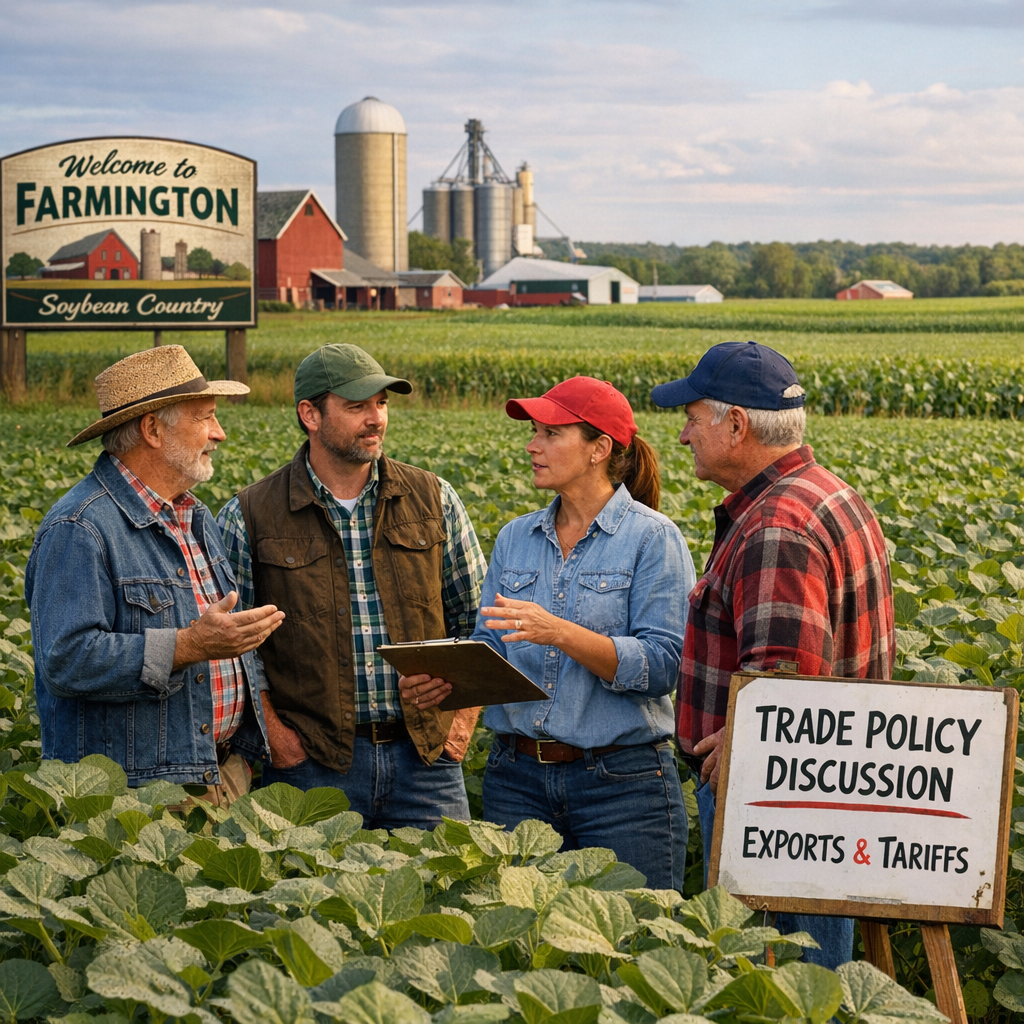
In our interconnected world, international trade policies have far-reaching effects, even on local communities like Farmington. Recent global trade developments have significantly impacted our agricultural sector, particularly soybean farmers.
Impact on Local Farmers
Farmington’s economy is deeply rooted in agriculture, with soybeans being a major crop. Changes in international trade agreements and tariffs have led to reduced export opportunities, causing financial strain for local farmers. For instance, in 2025, Minnesota’s soybean exports faced challenges due to international trade disputes, leading to decreased market access and lower commodity prices.
Community Response
In response to these challenges, local farmers have been exploring alternative markets and diversifying their crops to mitigate risks associated with global trade uncertainties. Community support initiatives, such as local farmers’ markets and cooperative programs, have also gained momentum to bolster the local agricultural economy.
Looking Ahead
As global trade dynamics continue to evolve, it’s crucial for Farmington’s agricultural community to stay informed and adaptable. Engaging with policymakers, participating in trade discussions, and fostering local support networks will be key strategies in navigating the complexities of international trade.
Understanding the ripple effects of global events on our local economy underscores the importance of a connected and informed community. By staying engaged, Farmington can work towards sustaining and strengthening its agricultural heritage amidst global challenges.