

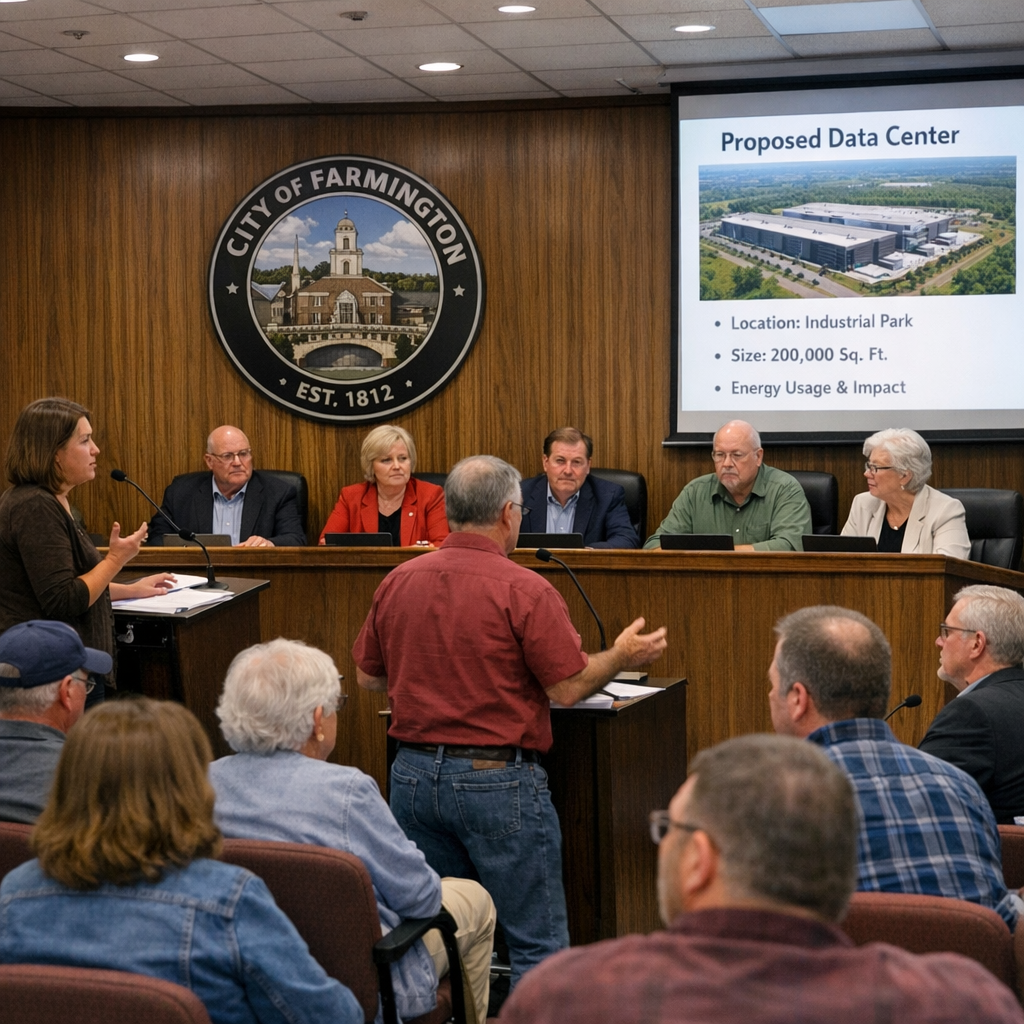
In recent months, the city of Farmington has been at the center of discussions regarding the proposed development of a large-scale data center. This project has sparked significant debate among residents, with many expressing apprehensions about its potential impact on the community.
Environmental and Resource Concerns
One of the primary issues raised pertains to the environmental footprint of the proposed data center. Residents are particularly worried about the facility’s substantial water consumption. Estimates suggest that the data center could double the city’s current water usage, drawing approximately 900 million gallons annually from local aquifers. This has led to fears about the sustainability of the community’s water resources and the potential strain on the local environment.
Transparency and Community Involvement
Another point of contention is the perceived lack of transparency surrounding the project’s development. The use of non-disclosure agreements (NDAs) between city officials and developers has limited public access to critical information about the data center’s operations and potential impacts. This has resulted in residents feeling excluded from the decision-making process, leading to increased frustration and distrust.
City Leadership and Public Discourse
The situation reached a boiling point during a City Council meeting in early February, where tensions between officials and residents escalated. The meeting became contentious over the enforcement of public comment time limits, culminating in heated exchanges. Shortly thereafter, Mayor Joshua Hoyt resigned, citing the need to prioritize his mental health. Council member Nick Lien has since stepped in as acting mayor, with the council planning to address the vacancy in upcoming meetings.
Looking Ahead
As Farmington navigates these challenges, the community continues to advocate for greater transparency and environmental responsibility in the development process. Residents are calling for a more inclusive approach that considers the long-term well-being of the city and its resources. The outcome of this debate will likely have lasting implications for Farmington’s growth and the relationship between its citizens and local government.