

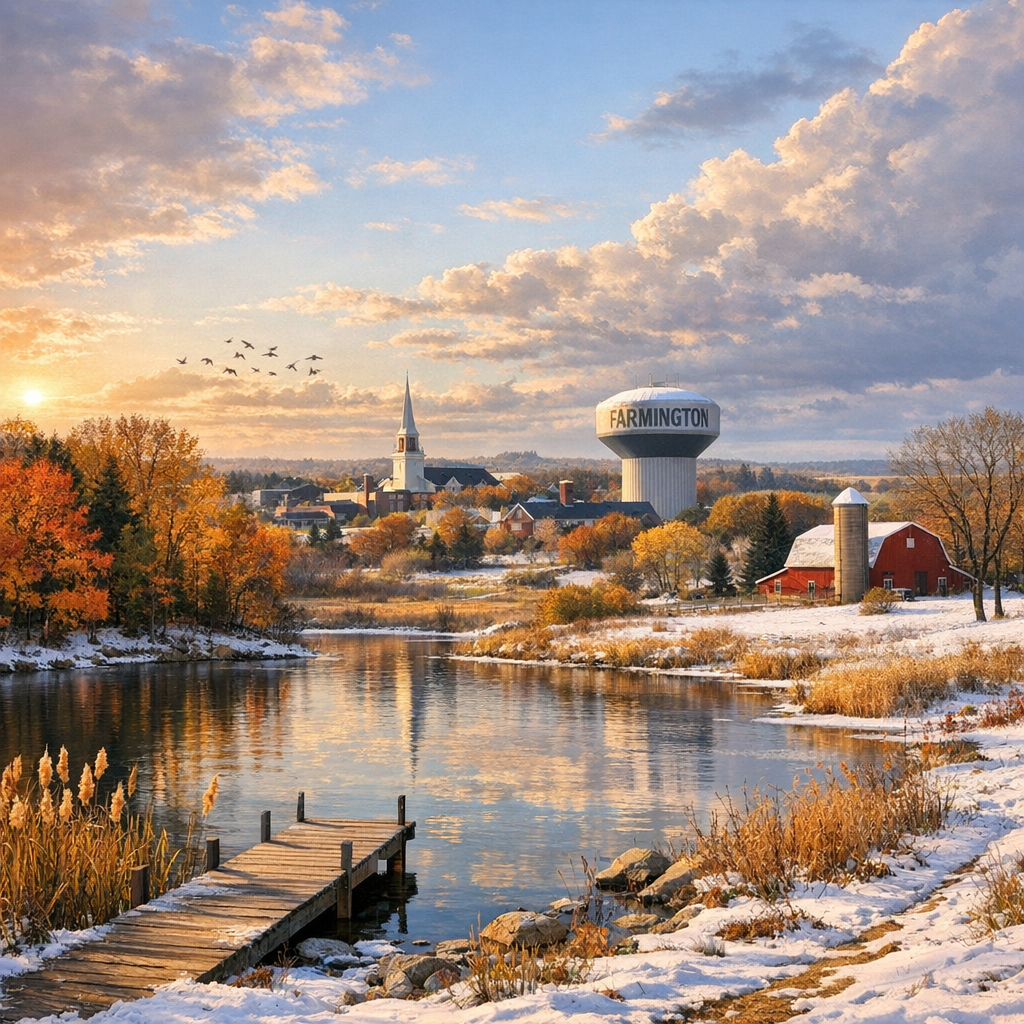
Farmington, Minnesota, experiences a diverse climate characterized by distinct seasonal variations. Summers are typically warm and wet, while winters are cold and snowy. The average annual temperature ranges from 8°F to 82°F, with July being the warmest month, averaging a high of 82°F and a low of 63°F. Conversely, January is the coldest month, with average highs around 23°F and lows near 7°F.
Precipitation is distributed throughout the year, with June being the wettest month, averaging approximately 5.09 inches of rainfall. In contrast, January tends to be the driest, receiving about 0.89 inches of precipitation. These patterns contribute to the region’s humid continental climate, characterized by significant temperature differences between seasons.
Recognizing the importance of preserving its natural resources, the City of Farmington has implemented several environmental initiatives. The Natural Resources staff is dedicated to monitoring and maintaining local ecosystems, including prairies, wetlands, and oak woodlands. Their responsibilities encompass boulevard tree inspection, stormwater pond maintenance, and the enforcement of policies designed to conserve the city’s natural assets.
Stormwater management is a critical focus for the city. Stormwater, which is rainwater or melted snow that flows off streets and lawns, can collect pollutants such as fertilizers, pesticides, and pet waste. To address this, Farmington has developed a Stormwater Pollution Prevention Plan (SWPPP) outlining programs and policies aimed at reducing stormwater pollution. The city encourages residents to participate in public comments on the SWPPP and to adopt practices that minimize pollution, such as proper disposal of hazardous wastes and maintaining vegetation buffers near water bodies.
Water conservation is another priority. Farmington relies on groundwater from seven wells to supply drinking water. To manage demand, especially during summer months when usage can peak at 6.5 million gallons per day, the city enforces an odd/even watering policy year-round. Residents are encouraged to water their lawns only on designated days and to avoid watering between noon and 6 pm to promote efficient water use.
By understanding Farmington’s climate and supporting these environmental initiatives, residents can contribute to the sustainability and health of the community’s natural resources.