

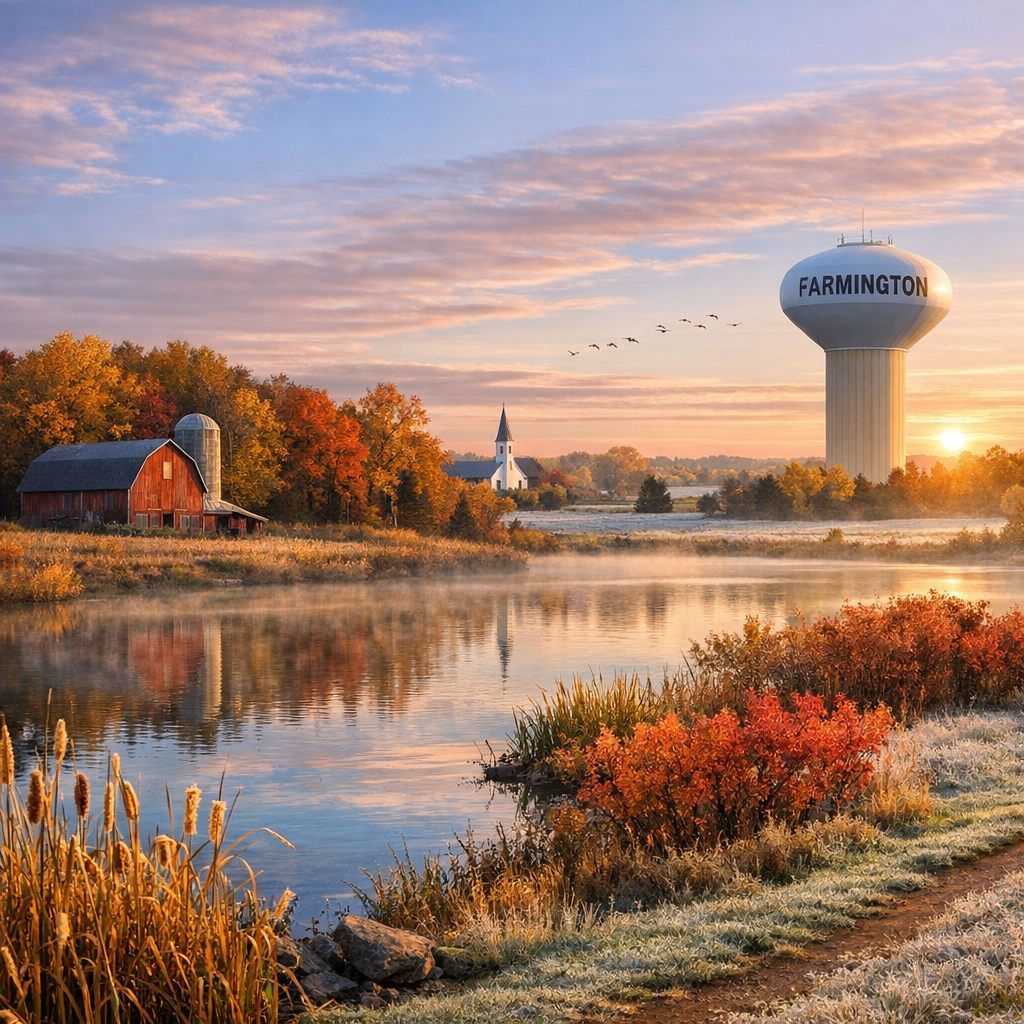
Farmington, Minnesota, experiences a diverse climate characterized by distinct seasonal changes. Understanding these patterns is essential for residents to adapt and contribute to local environmental conservation efforts.
Climate Overview
Farmington’s climate features warm, wet summers and cold, snowy winters. Average temperatures range from lows of 8°F in winter to highs of 82°F in summer. The warm season spans approximately four months, from late May to mid-September, with July being the hottest month. Conversely, the cold season lasts about three months, from late November to early March, with January being the coldest month. Precipitation is fairly evenly distributed throughout the year, with August typically being the wettest month.
Environmental Conservation Efforts
The City of Farmington is actively engaged in preserving its natural resources and maintaining water quality. Key initiatives include:
Stormwater Management
Stormwater runoff, which occurs when rainwater or melted snow flows over surfaces, can carry pollutants into local water bodies. To address this, Farmington has developed a Stormwater Pollution Prevention Plan (SWPPP) outlining programs and policies aimed at reducing stormwater pollution. Residents are encouraged to participate in public comments on the SWPPP to help shape effective strategies.
Water Conservation
With water demand significantly increasing during summer months, the city implements an odd/even watering policy to promote efficient water use. Residents are advised to water lawns between 4 and 8 am, avoid watering during peak heat hours, and water only when necessary to encourage deep root growth and drought resistance.
Natural Resource Preservation
Farmington’s natural resources, including prairies, wetlands, and oak woodlands, are monitored and maintained to ensure their conservation for future generations. Efforts include boulevard tree inspections, stormwater pond maintenance, and enforcement of policies designed to preserve the city’s natural resources.
Community Involvement
Residents play a crucial role in environmental conservation. Simple actions such as reducing chemical use on lawns, properly disposing of pet waste, and planting native species can significantly impact local ecosystems. Additionally, participating in city programs and adhering to water use policies contribute to the overall health of Farmington’s environment.
By understanding our local climate and actively engaging in conservation efforts, we can collectively ensure that Farmington remains a vibrant and sustainable community for years to come.