

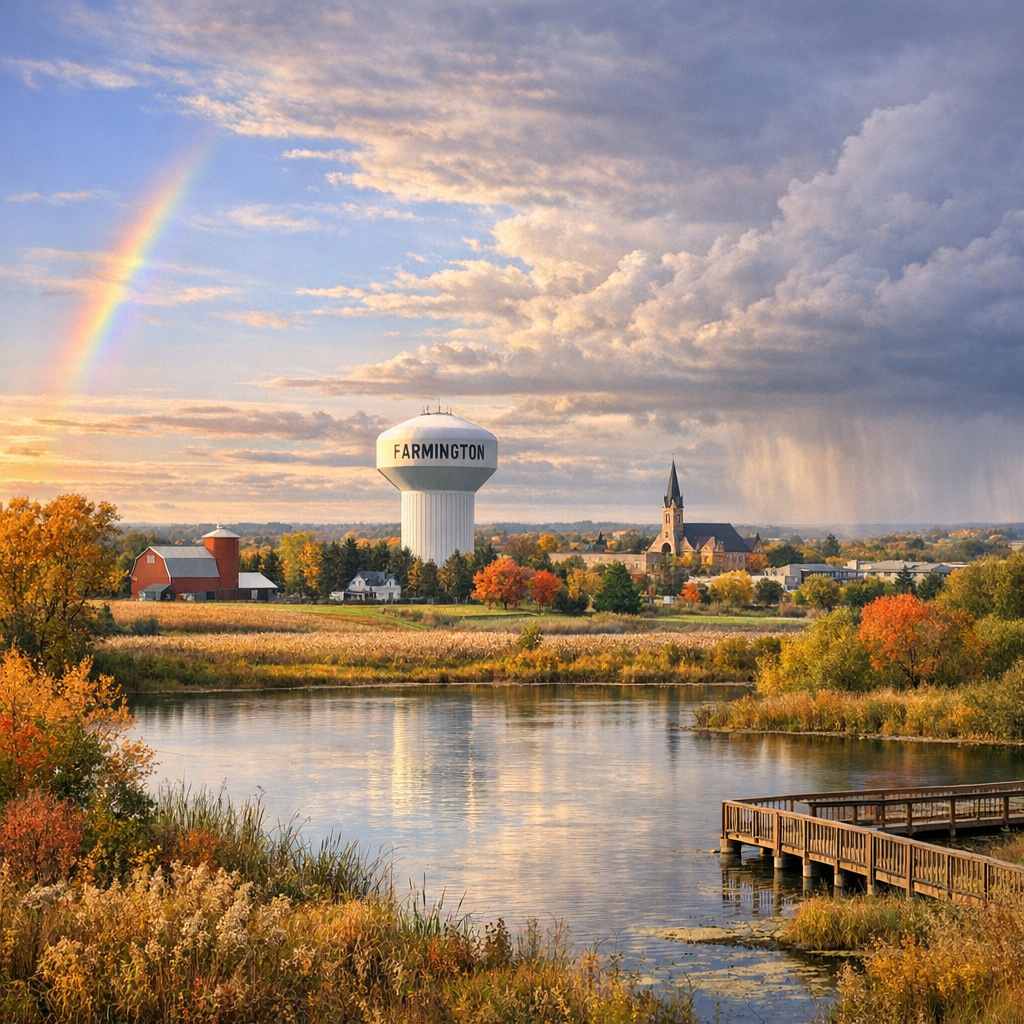
Farmington, Minnesota, experiences a diverse climate characterized by distinct seasonal changes. Understanding these patterns is essential for residents and visitors alike.
Climate Overview
Farmington’s climate is classified as humid continental, featuring warm, wet summers and cold, snowy winters. Throughout the year, temperatures typically range from 8°F to 82°F, with extremes rarely dipping below -12°F or exceeding 90°F. The warm season spans approximately four months, from late May to mid-September, with July being the hottest month, averaging a high of 82°F and a low of 63°F. Conversely, the cold season lasts about three months, from late November to early March, with January being the coldest month, averaging a high of 20.7°F and a low of 7.3°F.
Precipitation and Seasonal Changes
Precipitation in Farmington is fairly evenly distributed throughout the year, with an annual average of 33.44 inches. August tends to be the wettest month, averaging 4.54 inches of rainfall. Snowfall is common during the winter months, contributing to the region’s picturesque winter landscapes.
Environmental Initiatives
The City of Farmington is committed to preserving its natural resources and maintaining environmental quality. The Natural Resources staff oversees the conservation of prairies, wetlands, and oak woodlands within the community. Their responsibilities include boulevard tree inspection, stormwater pond maintenance, and enforcement of policies designed to protect the city’s natural resources.
Stormwater management is a key focus area. The city has developed a Stormwater Pollution Prevention Plan (SWPPP) to outline programs and policies aimed at reducing stormwater pollution. Public comments on the SWPPP are accepted through December 31, 2025, providing residents an opportunity to participate in environmental stewardship.
Additionally, the city emphasizes water protection through its wellhead protection plan, ensuring a clean and sufficient drinking water supply for the community. Residents are encouraged to engage in practices that reduce stormwater pollution, such as conserving water, practicing good lawn care, and planting native species.
By understanding Farmington’s climate and participating in local environmental initiatives, residents can contribute to the sustainability and health of their community.